The College Baseball Season: To Extend Or Not To Extend

NCAA To Decide Season’s Length This Week

By Collegebaseball360.com Editor Sean Stires


An NCAA Committee will vote this Friday (Jan. 15) on whether or not to extend the length of the college baseball season from 13 to 14 weeks.  Actually, it will vote on whether to override a vote that has already added a 14th week to the beginning of the season.  What?

The 2010 season was originally supposed to start on Feb. 26, but in July a week was added at the front of the season, making the start date Feb. 19.

The vote on the issue was split pretty geographically.  Most Southern schools wanted the extra week, while most Northern schools opposed adding the extra week to the start of the season.  (Anyone who can look out their window and see the snow that I see on the ground right now can understand why.)

Here’s a compromise:  Add the week, but Southern schools from BCS Conferences have to start returning some hospitality & travel north at the end of the season.

We have the Big Ten/Big East Challenge again this year, but how about the Big Ten/SEC Challenge and the Big East/ACC Challenges next year?   Rutgers already traditionally goes to Miami (FL) and Georgia Tech early in the year.  Let the ‘Canes or Yellow Jackets go to Bainton Field in May & listen to that rock clank against the backstop for a weekend…(Seriously).  How about Ole Miss, Florida or LSU rolling into Columbus to face Ohio State in May?

Forget about Northern teams going South to start their seasons when many of them are seeing real ground balls  and high skies for the first time.  With the extra week at the end of the season the teams from the North can play host to their Southern counterparts in May in midweek contests when classes and finals are over.  Most schools have a conference bye week in May anyway, so it shouldn’t be hard to find room in the schedule.

I’ve talked before about being creative to grow college baseball in the Northern areas, and there would be nothing better than to get some of those traditional powers from the South to come North to create some buzz prior to postseason play.

How excited do North Carolina fans really get about having Maine, Michigan or St. John’s come to town?  It’s nice, but North Carolina going to Maine, Michigan or St. John’s would get fans of those teams a lot more excited than another midweek game against Northeastern, Bowling Green or NYIT.

It’s only fair for those teams from the South to make Northern cameos even if only once every couple years.  The whole issue is supposed to be about missed class time caused by playing more midweek games in 13 instead of 14 weeks.  How are Southern schools missing more class time than their Northern counterparts when they are playing roughly 35 home games compared to about 23 home games for teams in the North?

It’s not a stretch to think the issue is less about missed class time and more about not worrying about finding a fifth starter to pitch an extra midweek game every week.  Teams like Texas and Rice have already lightened their regular season slates by playing games in the fall to compensate for the shorter season.  Teams in the North that are serious about an NCAA at-large bid don’t have that luxury, because they need every game to try to get to 40 wins to build their NCAA case.

Here’s a quick look at the differences in a few schedules based on geography:

Texas:  Plays its first 27 games in the state of Texas, including 20 of those games in Austin.  Trips to Oklahoma, Missouri and Kansas State are their only games outside of Texas prior to the postseason.  36 home games.

Florida State:  Plays its first 16 games in the state of Florida.  Doesn’t make its first road trip until March 19 at North Carolina.  35 home games.

Arizona State:  Plays its first 17 and 23 of its first 25 games in Arizona.  Plays 30 home games plus four more games in nearby Surprise, AZ.

North Carolina:  Doesn’t leave North Carolina until starting an ACC series on April 2 at Mayland.  23 of the Tar Heel’s first 27 games are in Chapel Hill, with a 3-game series just a Levi Michael line drive away in Durham vs. Duke.  38 home games.

LSU:  Plays its first 12 and 20 of its first 21 games at home (the other game in Natchitoches, LA).  March 26 is the first venture outside of Louisiana for the defending national champs.  38 home games.

Now the Northern schools:

Ohio State:  Plays its first 22 games on the road.  Plays its home opener on March 31.  21 home games.

Notre Dame:  Plays its first 15 games on the road.  Home opener is March 20.  25 home games.

St. John’s:  Plays its first 13 games on the road.  Home opener is March 16.  24 home games.

Michigan:  Plays its first 18 games on the road.  Home opener is March 26.  22 home games.

It’s easy to see that there’s an inherent competitive disadvantage for Northern teams.  They don’t just have to travel for those extra road games, they also have to fly to most of those games while many if not all of the road trips for the Southern teams are via bus.  That means even more cost (there’s no airline discount for baseball teams for checking 70 plus bags per trip.)

The argument can be made that the Northern schools I’ve mentioned are from BCS Conferences, so they should be able to afford the travel.  But what about teams from conferences like the America East, Atlantic 10 & Horizon League (and others)?  They don’t have the BCS trickle down (or even windfall from multiple NCAA basketball tourney bids), but they still have to fly south while their counterparts in the Big South, Atlantic Sun, etc. have shorter bus trips (mostly) and they also occasionally get teams from the ACC and SEC to play in their home parks.

A case can also be made that if Northern teams are serious about winning they should invest more in their baseball programs.  Scaling down their travel costs and adding a few more marquee games to get more fans through the turnstiles won’t change any program overnight, but it’s a step in the right direction.

Look at the Big Leagues.  Kansas City doesn’t come close to packing Kauffman Stadium on a daily basis, but they (and every other team) see attendance spikes when the Yankees and Red Sox come to town.  That’s the kind of effect teams like LSU, UNC, Florida State and the rest would have.

Fans in the South get to see top teams all the time, but most fans in the North don’t get to see those same teams until they’re on TV in Super Regionals and at the College World Series.

I have talked to a couple of coaches who don’t want to say anything on the record right now, but there is a good chance we will see a “major” program or two venture North in the near future.

True equity is never going to happen, because there are so many schools in so many parts of the country involved.  But what’s better for college baseball in May – Louisiana Tech vs. Texas in Austin or Texas vs. Michigan in Ann Arbor?

By the way, mercury actually does exceed 80 degrees in Michigan in May.

West Virginia 2010 Baseball Schedule

MORGANTOWN, W.Va. – West Virginia University Director of Athletics Ed Pastilong has announced the 2010 baseball schedule, highlighted by 32 home games and five matchups against 2009 NCAA Tournament participants.

“Coach Greg Van Zant has put together one of his most competitive schedules to date,” Pastilong said. “We are looking forward to another year of exciting baseball that features several quality opponents and some very challenging early-season tournaments.”

West Virginia opens the season with three competitive tournaments. The Mountaineers start off with the Caravelle Resort Tournament in Conway, S.C., featuring games against 2009 NCAA Tournament qualifier Coastal Carolina, Kentucky and Virginia Tech on Feb. 19-21.

WVU then makes a trip to the second annual Big Ten/BIG EAST Challenge in Clearwater/St. Petersburg, Fla., from Feb.

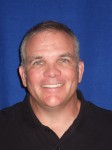
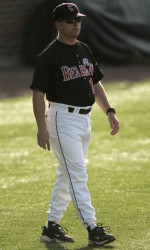
Greg Van Zant (WVU Photo)

Greg Van Zant (WVU Photo)

26-March 1. West Virginia will compete against reigning Big Ten champion Indiana, Iowa, Michigan State and will play an additional game against Purdue.

Complete 2010 West Virginia Schedule

The final early-season tournament is the Keith LeClair Classic in Greenville, N.C., from March 5-7. West Virginia faces Western Carolina, then battles 2009 Super Regional qualifier East Carolina before finishing with Illinois.

“All three of our tournaments are ranked as some of the top tournaments in the country,” Van Zant said. “We’re going to see some real good teams early in the season, and we’re looking forward to playing against them. We’re really going to be challenged these first 10 games.”

The Mountaineers make a return trip to Charleston, W.Va., to play Eastern Kentucky in the Mountaineer Diamond Classic at Appalachian Power Park on April 13. Last season’s contest in Southern West Virginia against Kentucky featured a capacity crowd of 2,452 that saw WVU defeat the Wildcats, 10-7.

“We always look forward to playing in our state capital,” Van Zant added. “Last year we had a great turnout and a huge win over Kentucky. We can’t wait to return to Charleston and play a different opponent in Eastern Kentucky, which is a strong program out of the Ohio Valley Conference.”

WVU’s Big East schedule includes five home series against NCAA Super Regional qualifier Louisville (April 16-18), Notre Dame (May 8-9), Big East postseason runner-up Connecticut (April 1-3), Pitt (April 23-25) and Villanova (May 20-22). The Mountaineers will play Seton Hall (March 26-28), St. John’s (April 9-11), Cincinnati (April 30-May 2) and Georgetown (May 14-16) on the road.

“The Big East schedule is always difficult, and this year we’ve got five of our opponents at home,” Van Zant mentioned. “It’s a big plus to have that extra weekend at home and all our games in the conference will be tough. We do feel that we have a real attractive home schedule.”

Also mixed into the non-conference portion is another matchup against Atlantic Coast Conference rival Maryland on April 7 in College Park, Md. The Mountaineers and Terrapins have played each other in five of the last eight seasons.

WVU plays host to a two-game series against defending MEAC champion and NCAA Tournament participant Bethune-Cookman from May 11-12.

West Virginia finished 37-18 last season, its best overall mark since 1998. The Mountaineers finished third in the BIG EAST and amassed 17 conference victories, its second-most since joining the BIG EAST in 1996.

Last year’s squad also set school records for batting average (.360), RBIs (491), doubles (161), extra base hits (242) and runs scored (525).

(Release)

Cincinnati 2010 Baseball Schedule

Two trips to Florida and five home conference series highlight 2010 ledger

CINCINNATI – Two trips to Florida to open the season and 31 home games highlight the 2010 University of Cincinnati baseball schedule. After falling just one win short of its second consecutive 30-win season, the Bearcats look to eclipse that plateau and contend for a BIG EAST Conference Championship in 2010.

UC will spend the first two weeks of the season in Florida beginning with a three-game set in Boca Raton, Fla., Feb. 19-21 against Florida Atlantic University. The Bearcats will then return to the Sunshine State Feb. 26-28, when

Cincinnati Head Coach Brian Cleary

Cincinnati Head Coach Brian Cleary

they participate in the second Big Ten-BIG EAST Baseball Challenge in the St. Petersburg/Clearwater, Fla., area. Cincinnati will open the Big Ten-BIG EAST Baseball Challenge against Penn State, before taking on Purdue and Ohio State to round out the event.

Complete 2010 Cincinnati Schedule

Following the Big Ten-BIG EAST Challenge, the Bearcats kick off their 31-game home schedule with a three-game series versus Youngstown State March 5-7. UC also will host LeMoyne College (March 10), Niagara (March 12-14), Toledo (March 19-21), Kentucky (March 30), Xavier (April 28), and Miami University (May 11) at Marge Schott Stadium in non-conference contests.

The Red and Black hit the road for non-conference games at Butler (March 23), at Dayton (March 24), at Ohio (April 20), at Xavier (April 27), at Wright State (May 5), and at Miami University (May 12). After hosting the Joe Nuxhall Classic last year, UC will travel up the road to Miami (OH) and McKie Field at Hayden Park to participate in the second Joe Nuxhall Classic April 13-14. For the second year in a row, the teams competing for the Joe Nuxhall Classic title will be UC, Miami (OH), Xavier, and Wright State.

UC plays five of its nine conference series’ at home this season, but the conference slate begins March 26-28 when the Bearcats travel to Plymouth Meeting, Penn., to take on Villanova. Other conference road series include Seton Hall (April 9-11), Notre Dame (23-25), and Connecticut (May 8-9).

USF (April 1-3), St. John’s (April 16-18), West Virginia (April 30-May 2), Pittsburgh (May 14-16), and Georgetown (May 20-22) will all make the trip to Clifton to play in Marge Schott Stadium, which was voted on by BIG EAST players and coaches as the favorite conference venue to play in.

(Release)

Tickets On Sale For 2010 Big Ten/Big East Challenge

TICKETS NOW AVAILABLE ONLINE FOR 2010 BIG TEN-BIG EAST BASEBALL CHALLENGE

Alumni and Group Fundraising Opportunities Available

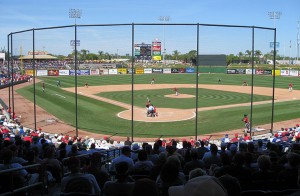
Brighthouse Networks Field In Clearwater, FL

Brighthouse Networks Field In Clearwater, FL

ST. PETERSBURG, FLTickets for the second Big Ten-BIG EAST Baseball Challenge, hosted by the St. Petersburg/Clearwater Sports Commission, will be available online at www.BigTenBIGEASTChallenge.com beginning at noon on Wednesday, October 28, 2009. The Challenge will take place February 26-28, 2010 at various current and former big league facilites. Those interested in purchasing tickets via phone can call 410-472-3500.

An all-tournament pass, which provides access to all 30 games of the Challenge, can be purchased for $25. Individual day passes are available for $10 and individual venue passes for Bright House Field and Dunedin Stadium are available for $5. An individual day pass will admit one spectator to any game on a given day at Progress Energy Park, the Raymond A. Naimoli Complex and Jack Russell Stadium. An individual venue pass will admit one spectator to any game on a given day at Bright House Field or Dunedin Stadium. Alumni groups, youth and social organizations also can sell all-tournament passes with a portion of the proceeds going to the selling organization. Information about fundraising opportunities is

Al Lang Stadium In St. Petersburg, FL

Al Lang Stadium In St. Petersburg, FL

available at www.BigTenBIGEASTChallenge.com.

All 10 of the Big Ten’s baseball-playing institutions will once again compete in the 2010 Challenge, including Illinois, Indiana, Iowa, Michigan, Michigan State, Minnesota, Northwestern, Ohio State, Penn State and Purdue. The BIG EAST will send 10 teams to the 2010 event, as Louisville, Rutgers and Villanova will make their first appearances and will be joined by seven squads making a return trip – Cincinnati, Connecticut, Notre Dame, St. John’s, Seton Hall, USF and West Virginia. Games will be played daily in St. Petersburg at the Raymond A. Naimoli Complex, the former spring training practice facility of the Tampa Bay Rays, and Al Lang Stadium, the Rays’ former spring training game site. Games in Clearwater will take place at Jack Russell Stadium, once the spring home of the Philadelphia Phillies.  The Challenge will also feature nightly doubleheaders at Dunedin Stadium, spring home of the Toronto Blue Jays and Bright House

Knology Park In Dunedin, FL

Knology Park In Dunedin, FL

Field, spring home of the World Champion Philadelphia Phillies.

There will be 10 games each day pitting Big Ten teams against BIG EAST representatives. Games are scheduled to begin at 10 a.m. Friday and Saturday and run into the evening both days. Sunday’s games are also slated to start at 10 a.m., but will conclude in the afternoon so that traveling schools can return to their campuses that evening.

Full 2010 Big Ten/Big East Challenge Schedule

(Press Release)

  • TWITTER

  • MORE COLLEGE BASEBALL COVERAGE

  • CB360 Sponsors

  • COLLEGE BASEBALL RSS FEEDS